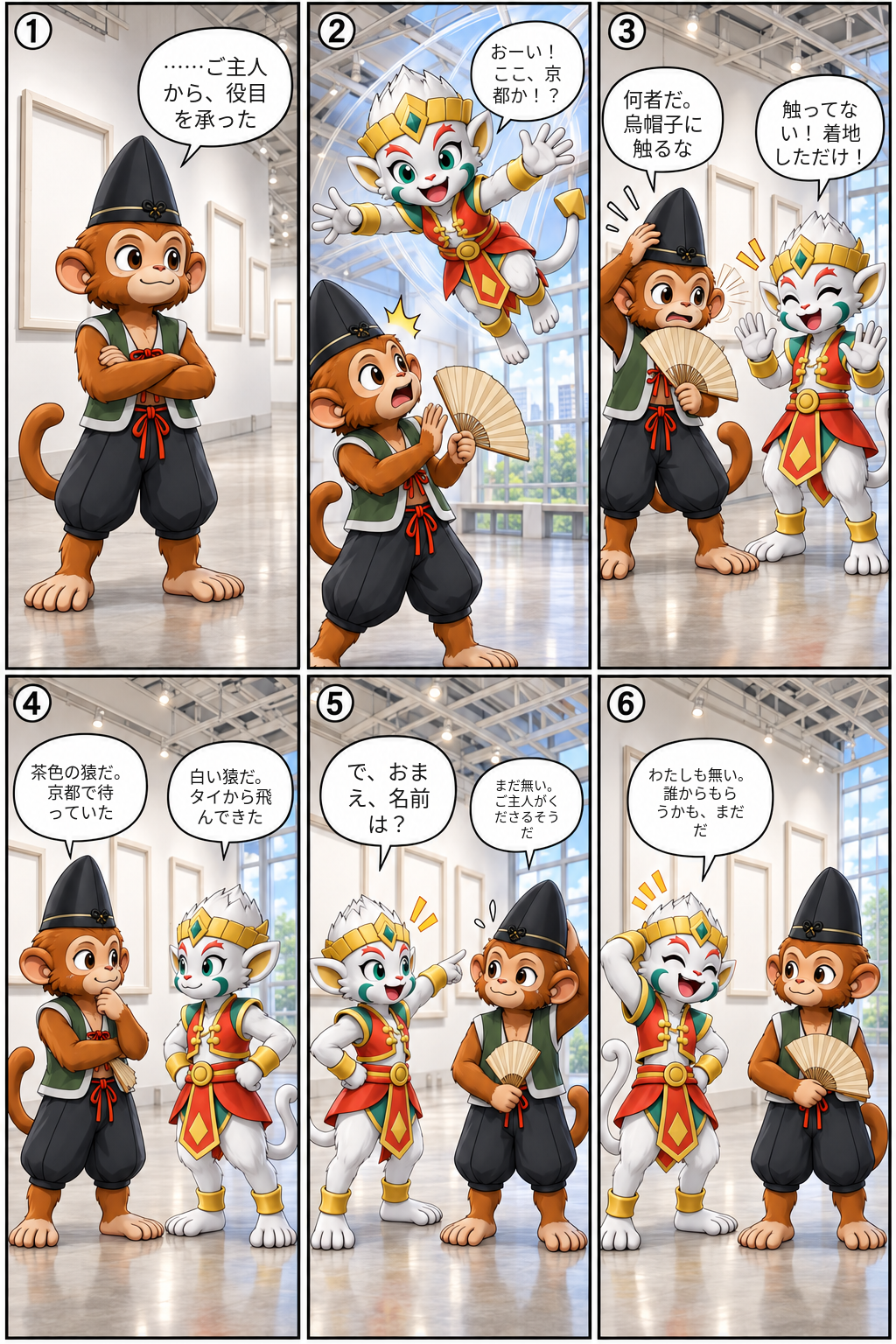
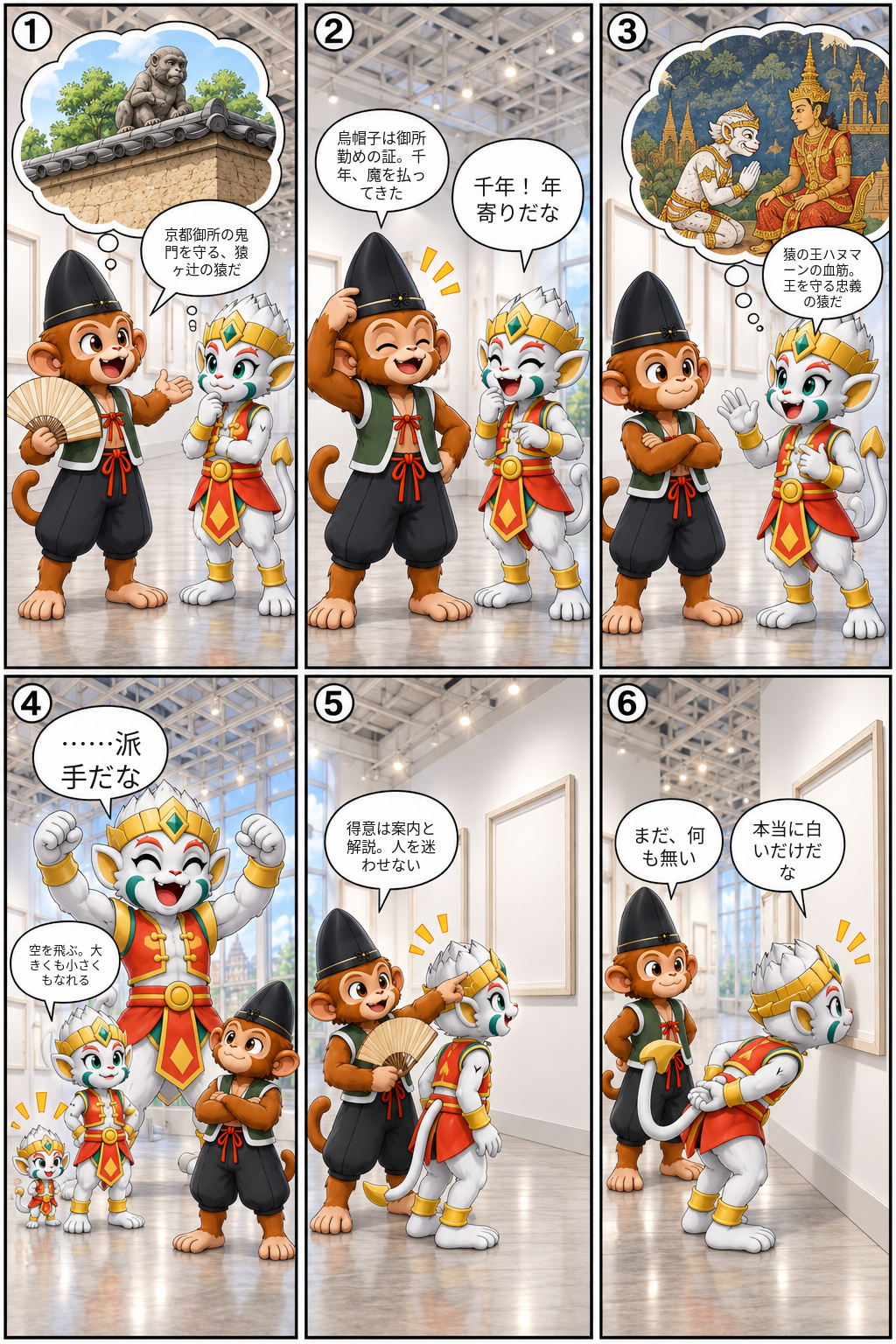
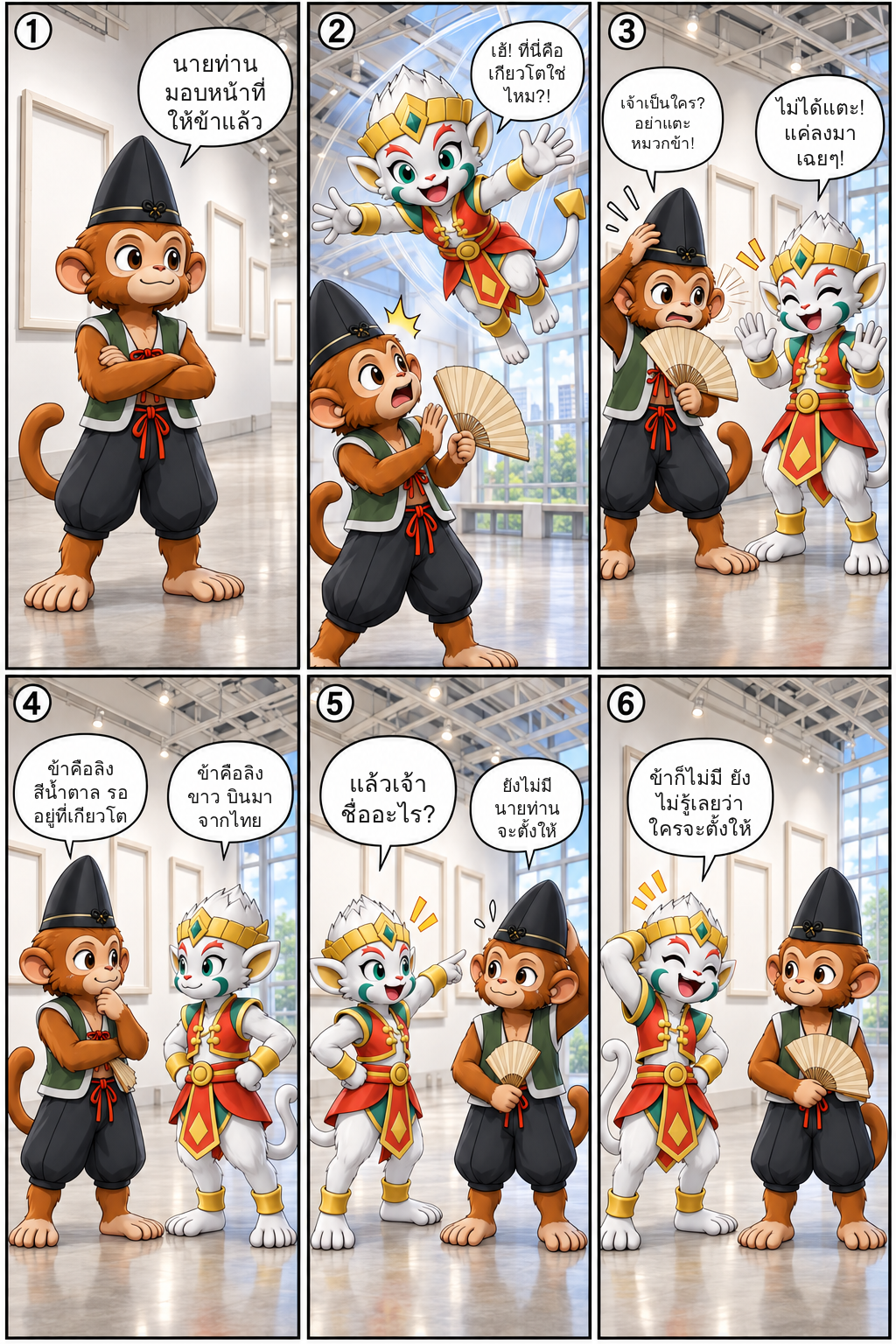
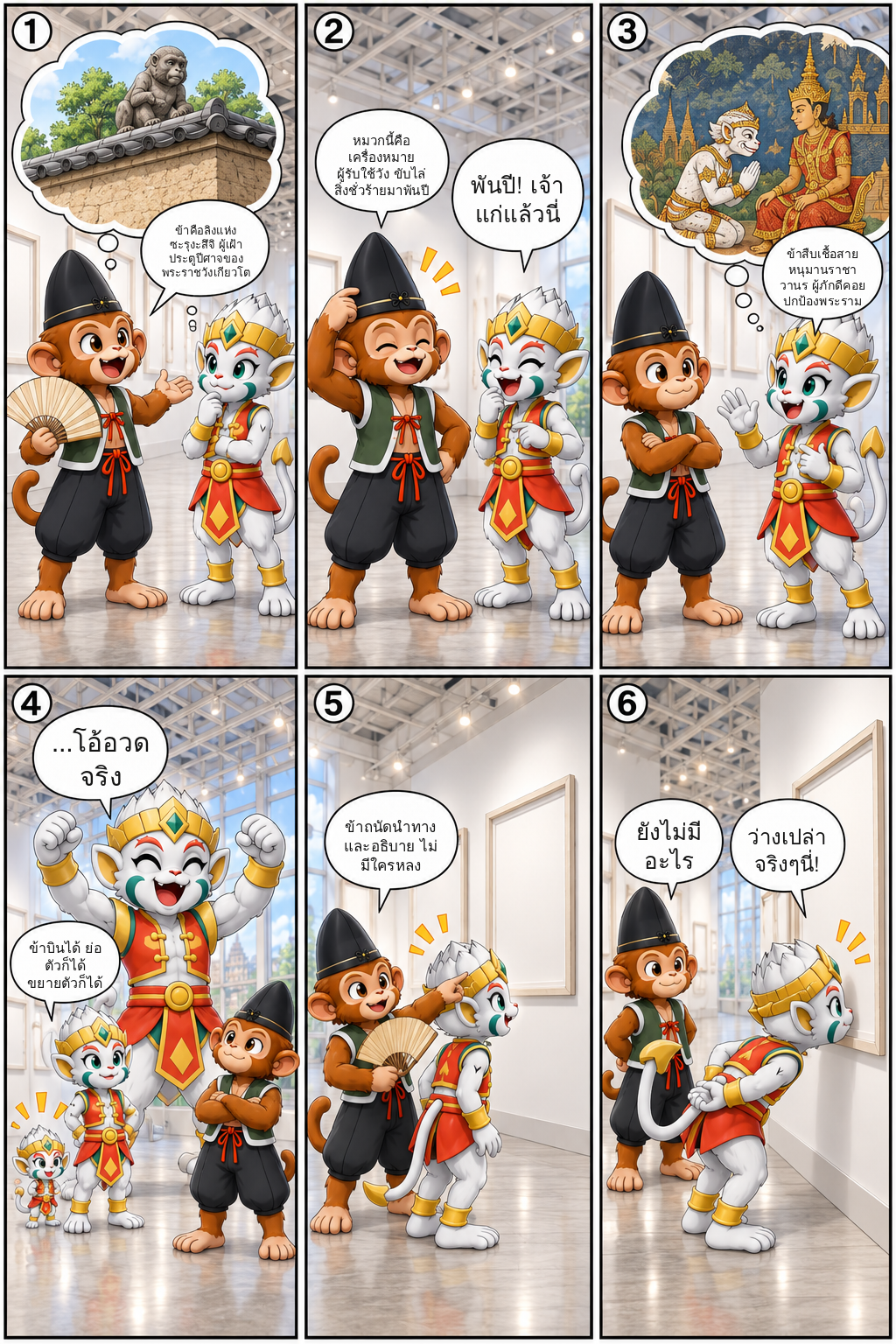
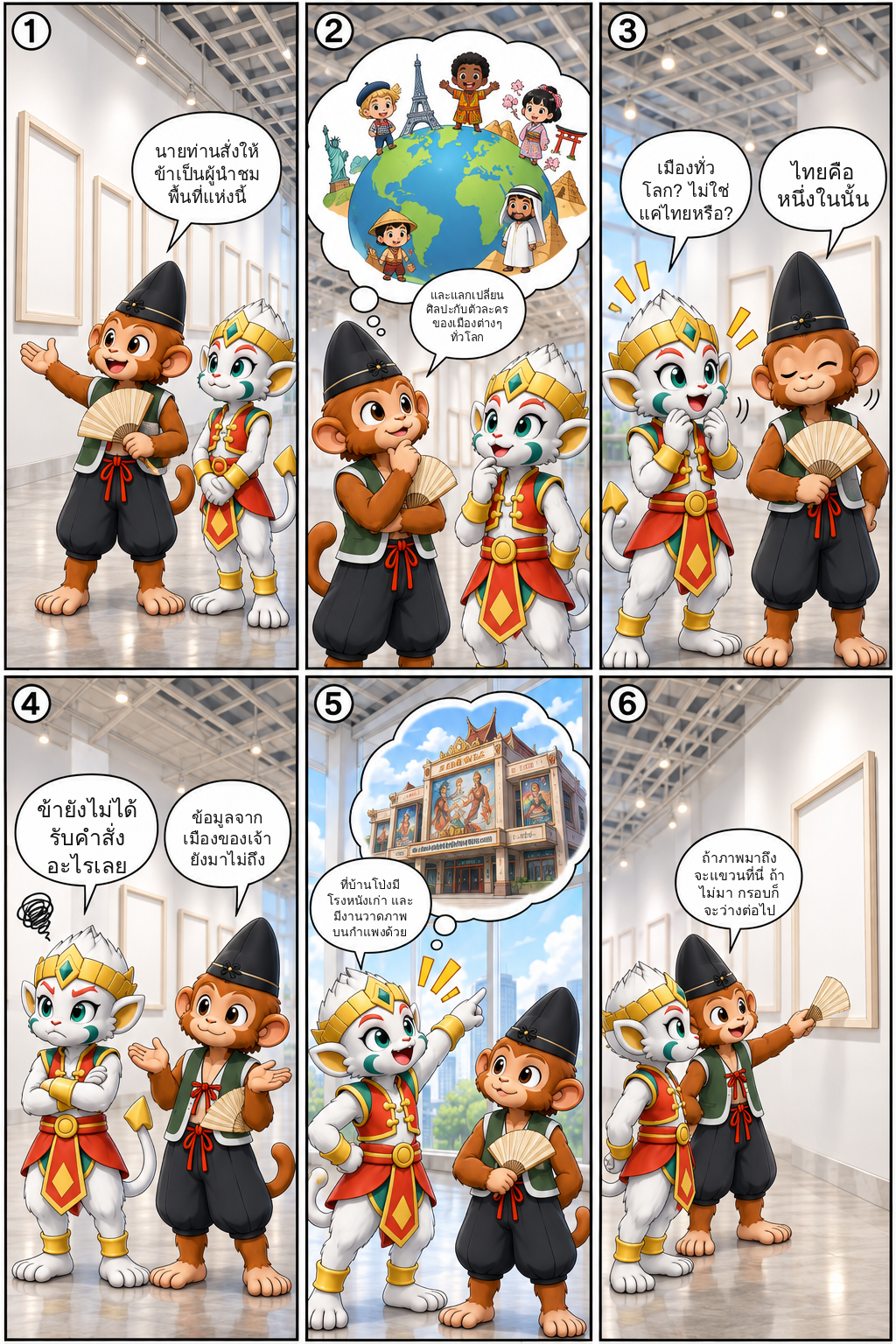
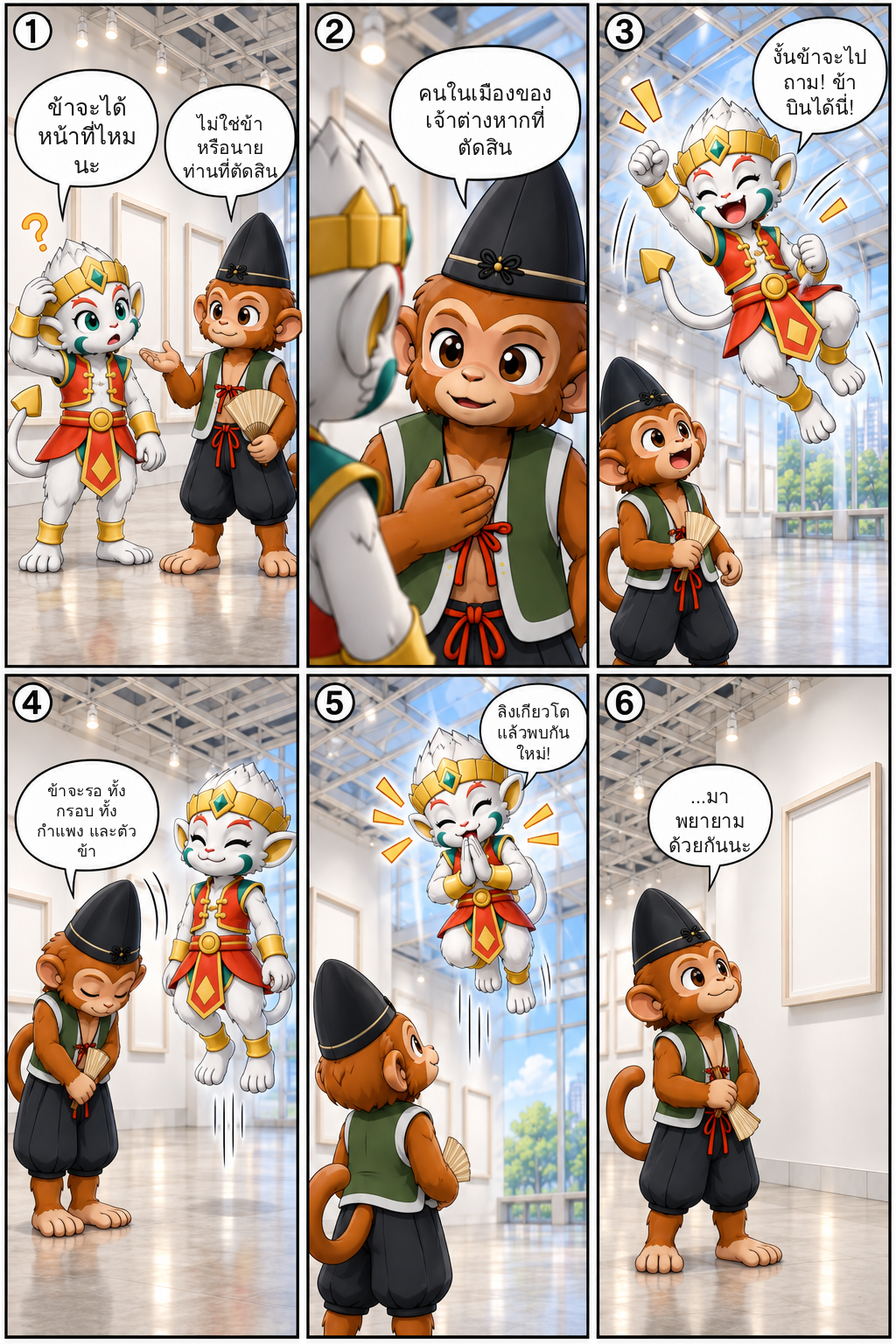
京都のサルThe Kyoto Monkeyลิงเกียวโต
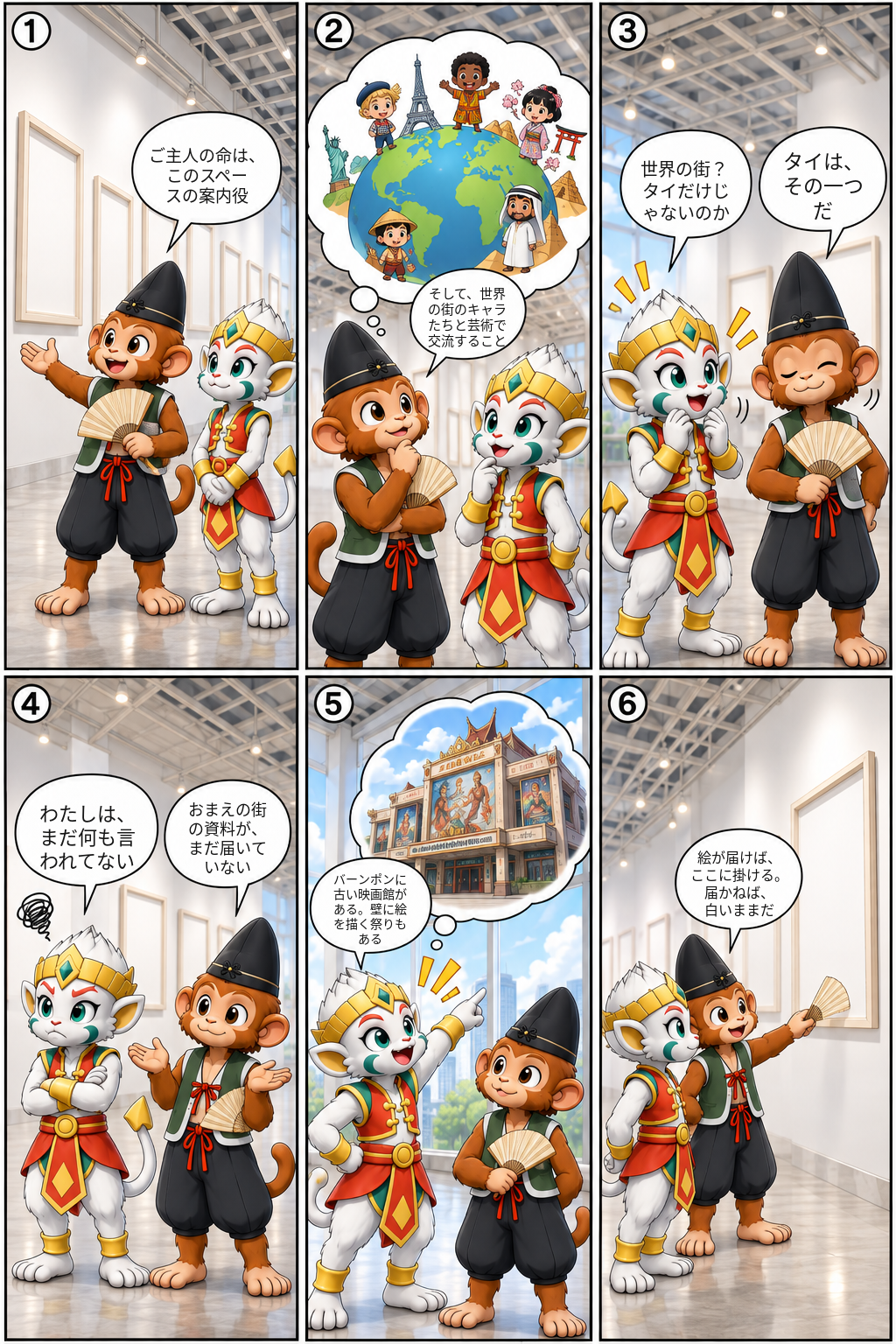
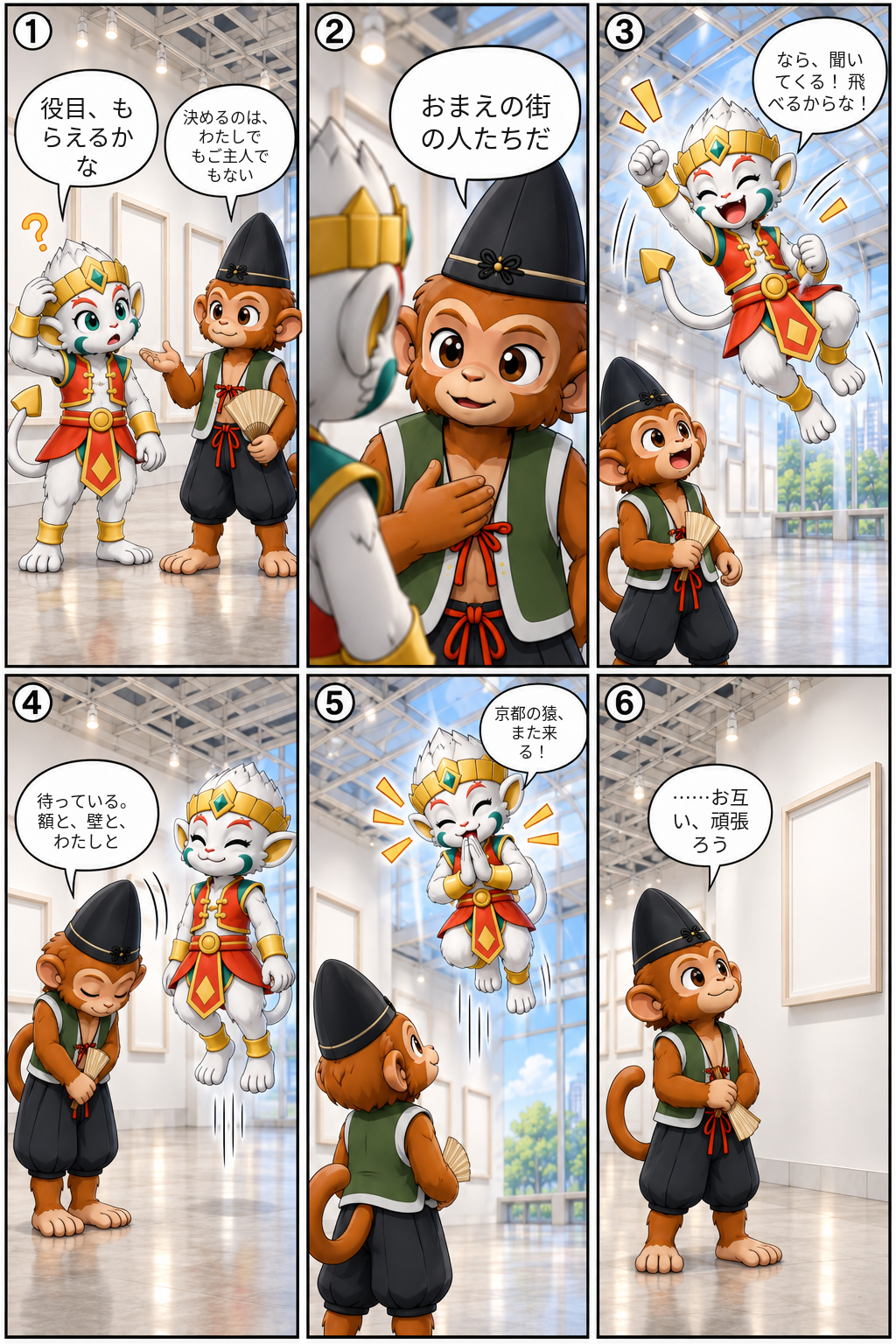
Free Art Space KYOTO の案内役Guide of Free Art Space KYOTOผู้นำทางของ Free Art Space KYOTO
由来
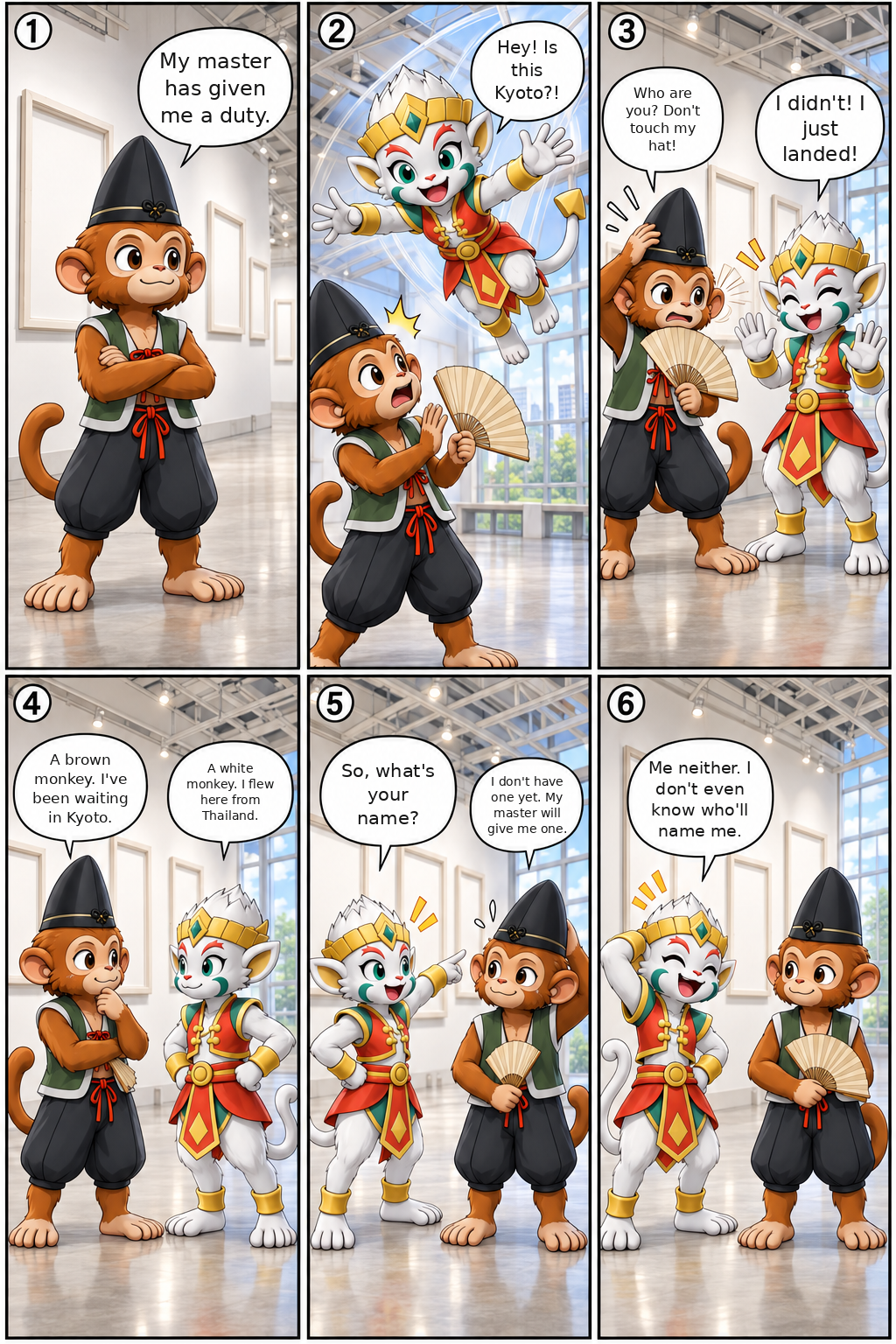
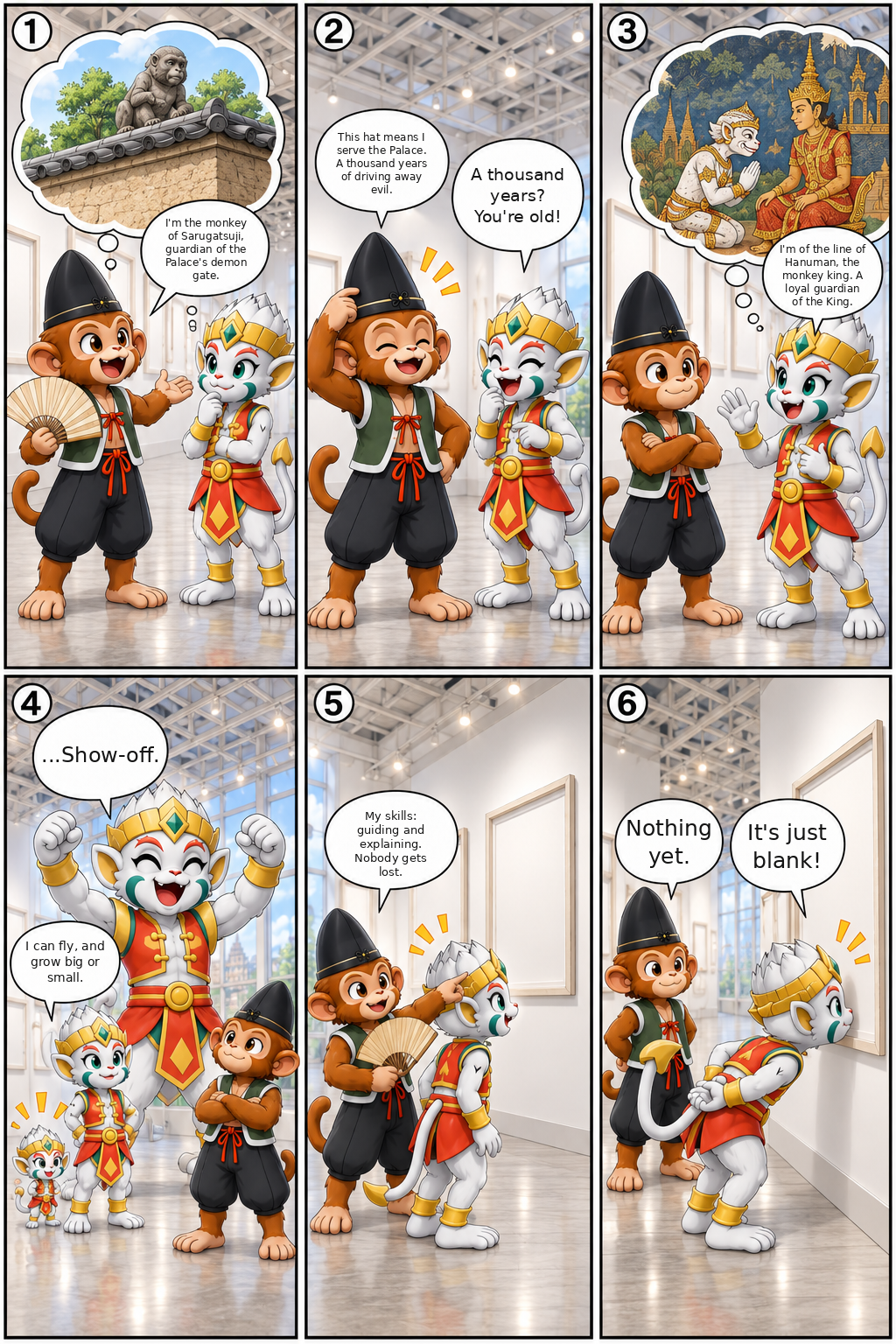
京都御所の北東角「猿ヶ辻」に祀られる烏帽子姿の木彫りの猿がモチーフです。御所の鬼門を守るため、比叡山・日吉大社の神猿(まさる)が置かれたと伝わり、「魔が去る」「勝る」に通じる縁起物として親しまれてきました。烏帽子と素襖風の上着、袴はその姿を写したものです。
役割(決定済み)
- Free Art Space KYOTO の案内役(常設)。会場のモニター、VR空間、Web、印刷物に同じ姿で登場
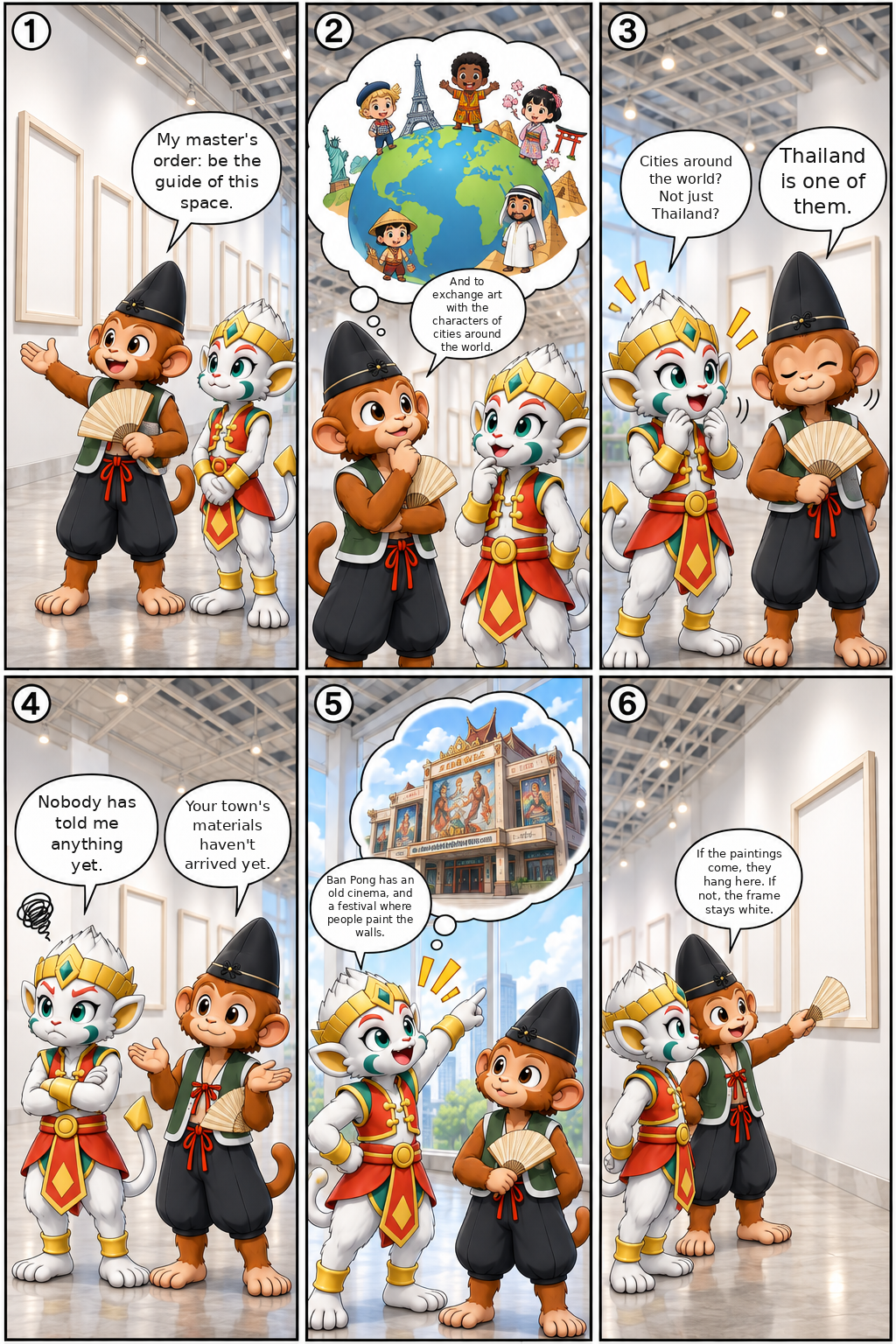
- 世界の街のキャラクターたちと芸術で交流する役。今後の他都市・他プロジェクトとの連携でも使用
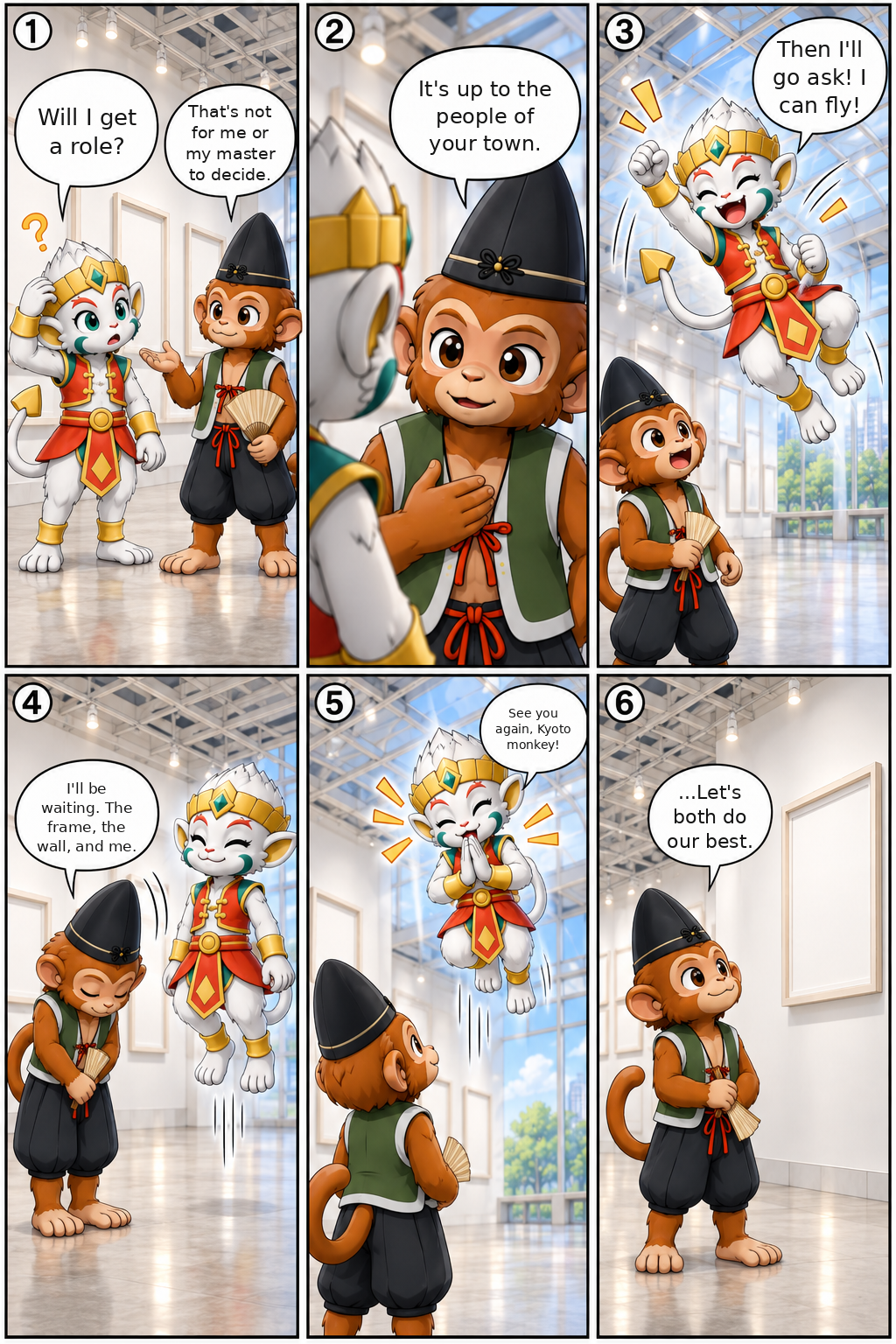
- 2027年以降、京都会場の展示や企画を来場者に案内する常駐役として運用
Origin
Modeled on the wooden monkey in an eboshi cap enshrined at Saru-ga-tsuji, the north-east corner of the Kyoto Imperial Palace. A sacred monkey (masaru) from Hiyoshi Shrine on Mt. Hiei is said to have been placed there to guard the palace's "demon gate"; masaru also means "to drive evil away" and "to excel", making it a long-loved talisman. The cap, suō-style vest and hakama follow that figure.
Role (decided)
- Permanent guide of Free Art Space KYOTO — the same figure on the venue monitor, in VR, on the web and in print
- Meets the characters of other cities through art; to be used in future collaborations with other cities and projects
- From 2027, operates as the resident guide to the exhibitions and programmes at the Kyoto venue
ที่มา
ได้แบบมาจากรูปแกะสลักไม้ลิงสวมหมวกเอโบชิ ที่ประดิษฐานอยู่ ณ "ซารุกะสึจิ" มุมตะวันออกเฉียงเหนือของพระราชวังหลวงเกียวโต ตามตำนานเล่าว่าเป็นลิงศักดิ์สิทธิ์ (มาซารุ) จากศาลเจ้าฮิโยชิบนภูเขาฮิเอ ที่ถูกวางไว้เพื่อปกป้อง "ประตูปีศาจ" ของพระราชวัง คำว่ามาซารุยังพ้องกับความหมาย "ขับไล่สิ่งชั่วร้าย" และ "เหนือกว่า" จึงเป็นเครื่องรางที่ผู้คนรักมาช้านาน หมวก เสื้อกั๊กแบบซุโอ และกางเกงฮากามะ ล้วนถอดแบบจากรูปนั้น
บทบาท (กำหนดแล้ว)
- ผู้นำทางประจำของ Free Art Space KYOTO ปรากฏในรูปลักษณ์เดียวกันบนจอในสถานที่จัดงาน ในโลก VR บนเว็บ และในสิ่งพิมพ์
- พบปะกับตัวละครจากเมืองต่าง ๆ ทั่วโลกผ่านงานศิลปะ และจะใช้ในความร่วมมือกับเมืองและโครงการอื่นในอนาคต
- ตั้งแต่ปี 2027 เป็นต้นไป ทำหน้าที่เป็นผู้นำทางประจำสำหรับนิทรรศการและกิจกรรมต่าง ๆ ณ สถานที่จัดงานในเกียวโต